


Delivering Power & Quality of Life
Center Island gets a new submarine cable
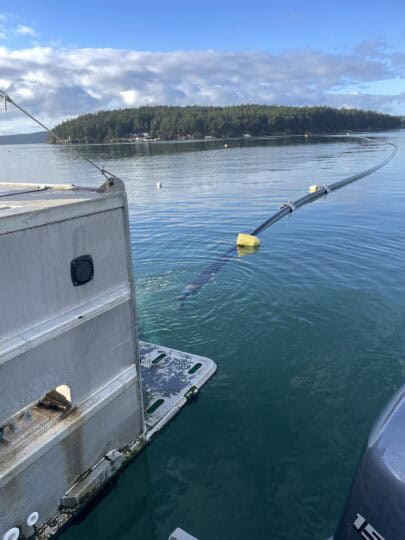 Center Island is a small island nestled between Decatur and Lopez islands with about 150 electric meters. It was home to the oldest submarine cable Orcas Power & Light Cooperative has in its service territory. The cables, which were installed and energized in 1967, have a 40- to 50-year useful life, so it was time to replace this aging cable.
Submarine cable replacement projects take years of coordination and planning. This project, which runs cable about 3,500 feet from Decatur Island to Center Island, is a bit easier than one of the bigger and longer cables that serve the more populated islands, but it still took eight years to get through the whole process. It can take more than a decade for a bigger project to go from initial planning to being energized.
“Complicated submarine cable projects like this are core to OPALCO’s mission, ensuring that island residents for all of San Juan County have reliable power from the mainland now and into the foreseeable future,” OPALCO System Designer Dan Vekved says. “Submarine cables that deliver us power are key to the quality of life in the islands.”
The first step in a project like this is to figure out the correct size of cable to meet the load—anticipating 40 to 50 years of growth—and find the best route for the cable. For this project, the team slightly modified the route from the original cable to avoid wetlands and leverage easements in an existing San Juan County road right of way. The next step is to get all the necessary permits, including those with San Juan County, Washington State Fish and Wildlife and the U.S. Army Corps of Engineers, and aquatic leases through the Department of National Resources. Each step in the process undergoes extensive review and oversight.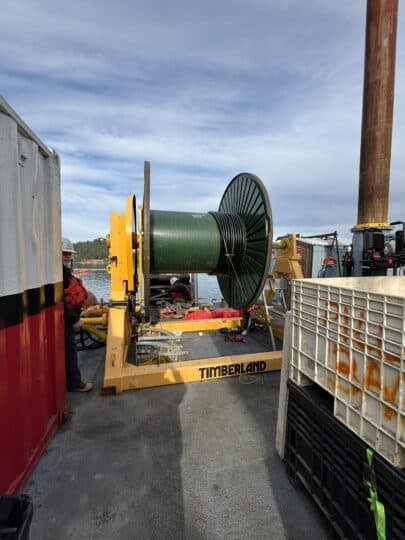
The project looks at construction methods and equipment needs on the two shorelines. For the Decatur side of the project, it was necessary to drill under the wetlands to install a conduit out to 2 feet below the average low tide mark and preserve that critical area. On Center Island, the crew was able to trench in the tidelands and lay the conduit out to the average low tide mark. The cable is enclosed in conduit on the shorelines to protect it and to ensure safety.
After the conduit was installed, it was time for a barge to lay the submarine cable in the water. The barge has a crane on it and houses giant spools of cable. Divers helped get the cable through the conduit and ensured it was laid correctly near the shorelines. The team used floats to help set the cable on the right path. It took the OPALCO crew and contractors about three days to lay the cable, with one day lost due to bad weather.
“These projects are really unique to the islands,” says Kai Burleson, the Lopez Island foreman who worked on this project. “I’ve worked on several submarine projects throughout the years, and each one presents its own set of conditions and challenges to getting the cable through the water and hooked into the OPALCO infrastructure.”
For more information on upcoming infrastructure projects, email communications@opalco.com.