

Dato curioso: Encuesta de energías renovables de OPALCO para 2025
OPALCO’s Renewable Energy Dilemma
The 2025 member survey revealed something important: OPALCO members support reliable, affordable, and cleaner electricity — but many of the projects needed to provide that power face increasing siting challenges.
This creates a difficult but unavoidable dilemma.
Members want:
- Reliable power
- Affordable rates
- Reduced dependence on mainland energy
- Cleaner electricity sources
But at the same time:
- Electricity demand continues to grow
- BPA submarine cable capacity is limited and aging
- Washington clean-energy laws are increasing costs
- Local renewable projects face significant land-use opposition
There is no path forward that avoids tradeoffs.
What the Survey Found
The survey results show strong support for local energy reliability and renewable generation:
- 82% say building local energy resources is important to reduce power disruptions
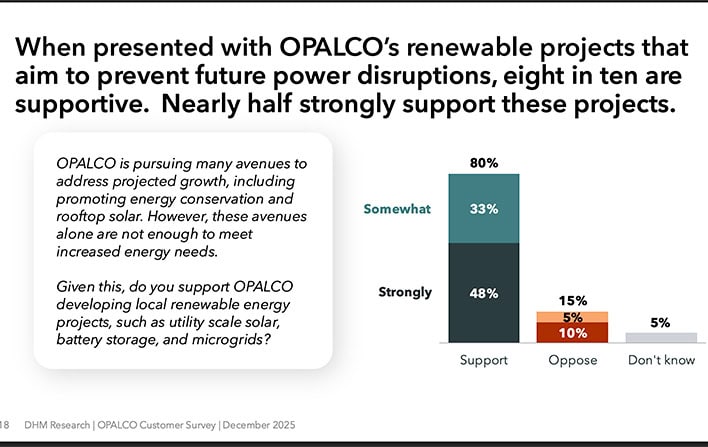
- 80% support local renewable projects such as solar, batteries, and microgrids
- 60% support adjusting land-use policies to improve energy reliability
- 71% say renewable projects should receive priority in the land-use process
- 71% say OPALCO should move forward with projects if reasonable efforts are made to reduce environmental and aesthetic impacts
- 74% support adjusting county policies to allow more local energy generation, especially when environmental protections remain in place
The survey also showed that members care deeply about environmental stewardship and aesthetics. Scenic views, wildlife impacts, and cost were the top concerns raised about renewable projects.
One takeaway for the OPALCO team is:
Members support renewable development — but they want it done responsibly and thoughtfully.
Demand continues to grow
San Juan County continues issuing new residential and commercial building permits every year (100 to 200 new building permits per year. Each new home increases permanent electric demand through:
- Heating and cooling
- carga de vehículos eléctricos
- Water systems
- Accesorios
- Electrification requirements
At the same time:
- AI/datacenter growth is increasing regional electricity demand
- Extreme weather events are stressing the grid
Demand is increasing whether or not local infrastructure is built.
The Siting Challenge
While new homes, roads, driveways, septic systems, and utilities routinely require tree removal and land clearing, siting renewable energy infrastructure often faces much greater resistance.
Under current San Juan County land-use rules:
- Utility-scale power generation is allowed outright on only a very small percentage of county land
- Much of the county requires conditional review processes
- Large portions of the county prohibit utility-scale generation entirely
At the same time, OPALCO’s grid requires generation to be located reasonably close to population and load centers in order to improve reliability and resilience.
This creates a growing tension between:
- Supporting continued growth and electrification
- Expecting reliable electricity
- And limiting the infrastructure needed to supply it
Regional Power Is Becoming More Constrained
San Juan County relies heavily on electricity imported through two BPA submarine cables that are approximately 41 and 25 years old.
The broader Pacific Northwest is also facing:
- Tightening regional power supply
- Rising wholesale electricity costs
- Increased winter and summer peak demand
- Retirement of traditional generation resources
- Higher costs associated with state carbon policies
When regional demand spikes, BPA must increasingly purchase power from the open market to meet load growth.
That means greater exposure to market volatility and rising costs.
State Law Is Changing the Energy System
Washington law requires utilities to transition toward cleaner electricity:
- No coal-fired electricity
- 100% carbon-neutral electricity by 2030
- 100% carbon-free electricity by 2045
The Climate Commitment Act also places increasing costs on carbon-intensive generation.
These policies are reshaping the regional energy market whether local communities build local generation or not.
Why Local Generation Matters
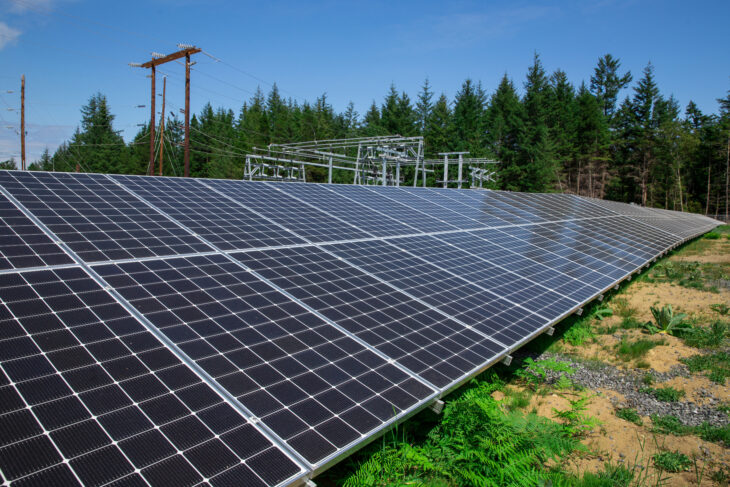
Local solar, battery storage, and microgrids are among the few tools OPALCO directly controls to improve resilience.
Local generation can:
- Reduce dependence on mainland transmission
- Improve reliability during outages
Support critical infrastructure
- Reduce exposure to volatile market pricing
- Improve long-term system resilience
The member survey shows that OPALCO members understand the tradeoffs.
We cannot simultaneously:
- Support continued growth in electricity demand
- Depend entirely on imported power
- Restrict most local generation
- Oppose infrastructure siting
- And expect reliability and affordability to remain unchanged
As a member-owned cooperative, OPALCO’s responsibility is to navigate these competing realities in a way that best serves the long-term interests of the entire membership — even when no solution is perfect.
Links: