

Dato breve: tarifas de OPALCO
Equilibrio entre costos, beneficios y equidad
Como cooperativa sin fines de lucro, OPALCO mantiene las tarifas lo más bajas posibles controlando los gastos y fijando el precio de la electricidad al costo residencial y comercial del servicio.
Si bien no existe un sistema de tarifas perfecto, OPALCO combina el acceso al servicio y los cargos de energía con programas de asistencia energética para bajos ingresos, eficiencia energética y generación renovable para garantizar que la combinación sea lo más justa posible para todos los miembros de la cooperativa.
- Los hogares que luchan por pagar sus cuentas reciben servicios de varios programas de asistencia energética Diseñado para mantener la energía más asequible.
- Los programas Switch It Up de OPALCO, líderes en la industria en eficiencia energética y bajo interés, ayudan a los miembros a reducir su consumo de energía y a cambiar de fuentes de combustibles fósiles más costosas y contaminantes del clima.
- Cuando los hogares consumen energía por encima del promedio, pagan cargos de energía más altos (14% a 31%) y un mayor acceso al servicio por servicios de gran tamaño (15% a 30%).
Proyectos de ley continentales versus proyectos de ley insulares: Equilibrio entre equidad
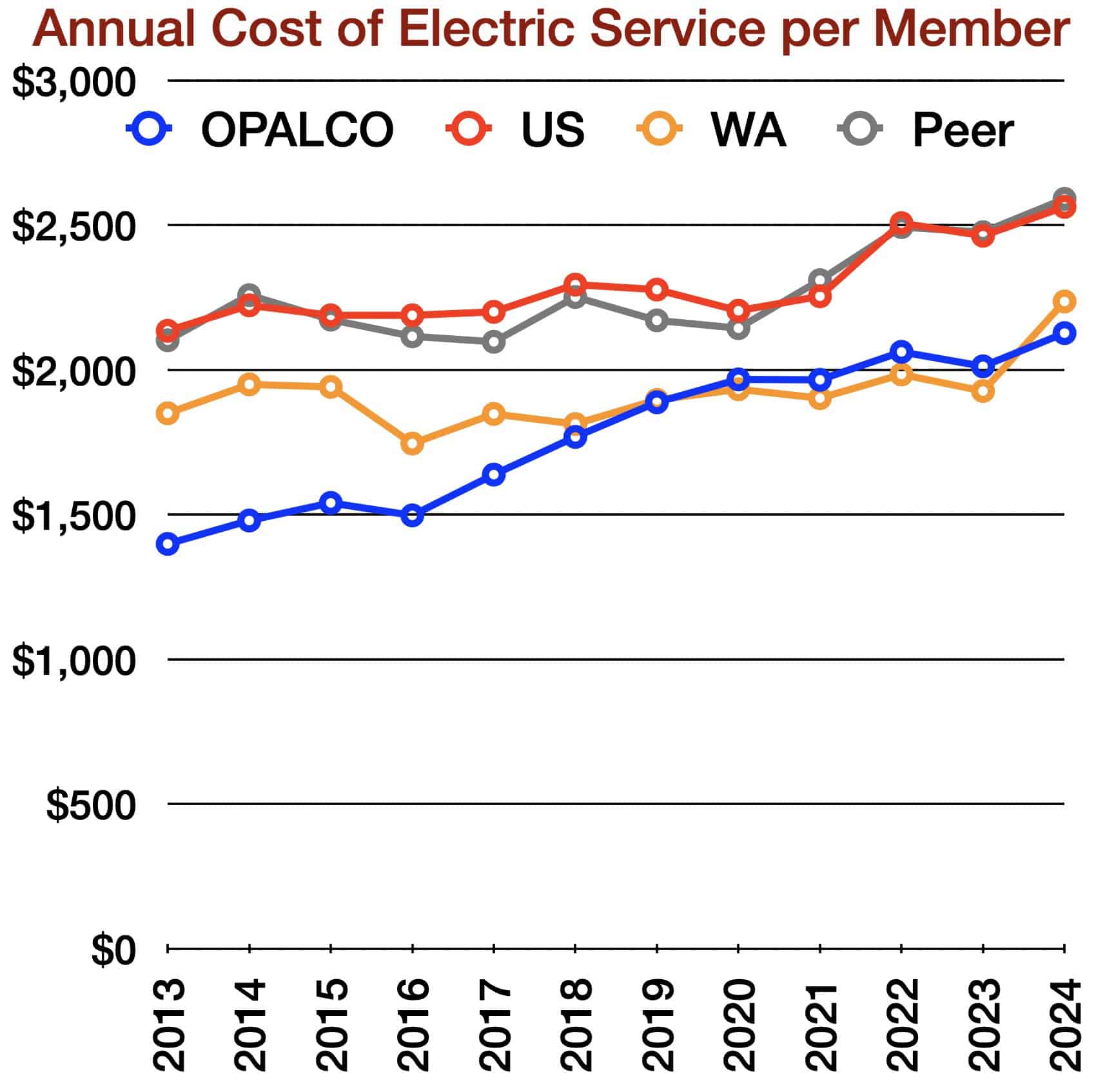
Aquí en las islas, el costo anual de la electricidad es comparable al del continente e inferior al de las cooperativas de tamaño similar y al promedio de EE. UU. La principal diferencia con nuestra tarifa de acceso al servicio más alta radica en quién se beneficia.
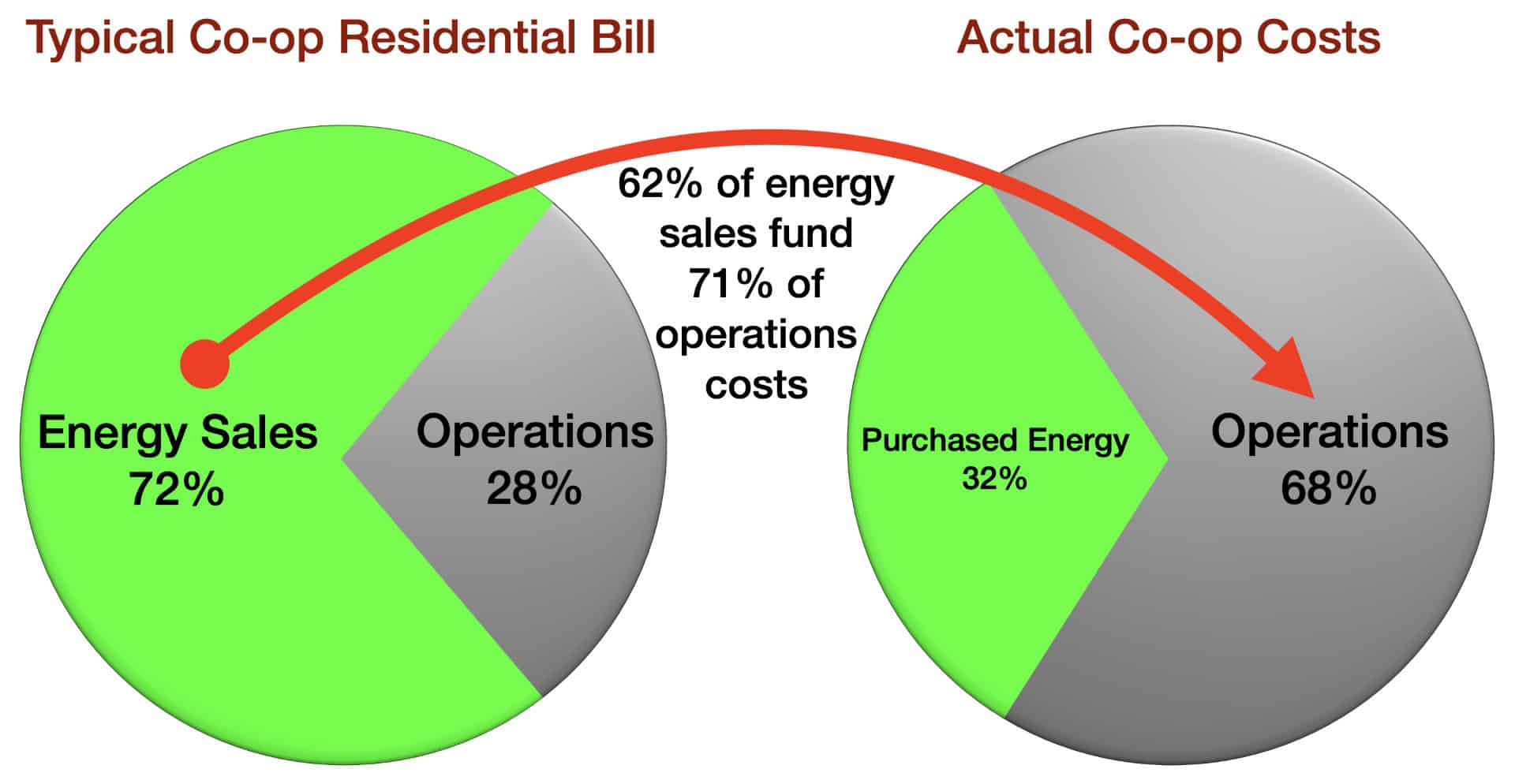
 Una tarifa de acceso al servicio más alta y una tarifa de energía más baja representan más estrechamente actual La cooperativa reduce los costos y distribuye las facturas de los miembros de manera más uniforme a lo largo del año, suavizando el impacto de las facturas de invierno.
- También garantiza que los miembros estacionales paguen su parte justa de la red, aunque normalmente fijan sus termostatos mucho más bajos en invierno, cuando OPALCO recupera la mayor parte de sus ingresos necesarios.
- La tarifa de energía renovable de OPALCO para productores de energía solar en azoteas ofrece un valor total por la energía que los miembros consumen en sus hogares. La energía que venden a la red se acredita aproximadamente al doble de la tarifa mayorista (un subsidio pagado por todos los miembros, incluidos los hogares que no pueden permitirse sistemas de energía solar en azoteas u otros sistemas de energía doméstica). OPALCO busca un equilibrio entre el fomento de la energía solar local y la equidad en el costo para todos los miembros de la cooperativa.
Costo de la red continental versus la red insular
Si bien las facturas anuales de energía de los miembros de OPALCO son comparables a las del continente, el costo de la red que abastece a 20 islas es mucho mayor. Un cargo por acceso al servicio más alto representa con mayor precisión... actual costos de la cooperativa.
- Para atender a la población del condado de San Juan en tierra firme, solo se necesitaría una subestación y líneas aéreas. En nuestra comunidad de 20 islas, OPALCO requiere 11 subestaciones, 40 kilómetros de cables submarinos y más de 1600 kilómetros de distribución, principalmente subterránea y protegida contra tormentas. El cableado subterráneo en la roca cuesta cuatro veces más que las líneas aéreas. Los cables submarinos cuestan aproximadamente 200 veces más.
- OPALCO organiza talleres públicos sobre tarifas y realiza un análisis independiente del costo del servicio cada pocos años para garantizar que todos los miembros de las cooperativas residenciales y comerciales paguen su parte justa. OPALCO Estudio de costos de servicio 2025 demostró que un cargo más alto por acceso al servicio asignará los costos de manera más justa entre los miembros y mejorará la estabilidad en los requisitos de ingresos para la cooperativa.
- La Junta prevé aumentos de tarifas de 4-6% en el futuro previsible, en función de los costos de energía, red y operación. La Junta está buscando maneras de aumentar las inversiones cooperativas en microrredes locales de energía renovable para reducir nuestra dependencia del continente, que está experimentando un rápido aumento de las tarifas eléctricas y una escasez de oferta y demanda.
Para mayor información: